
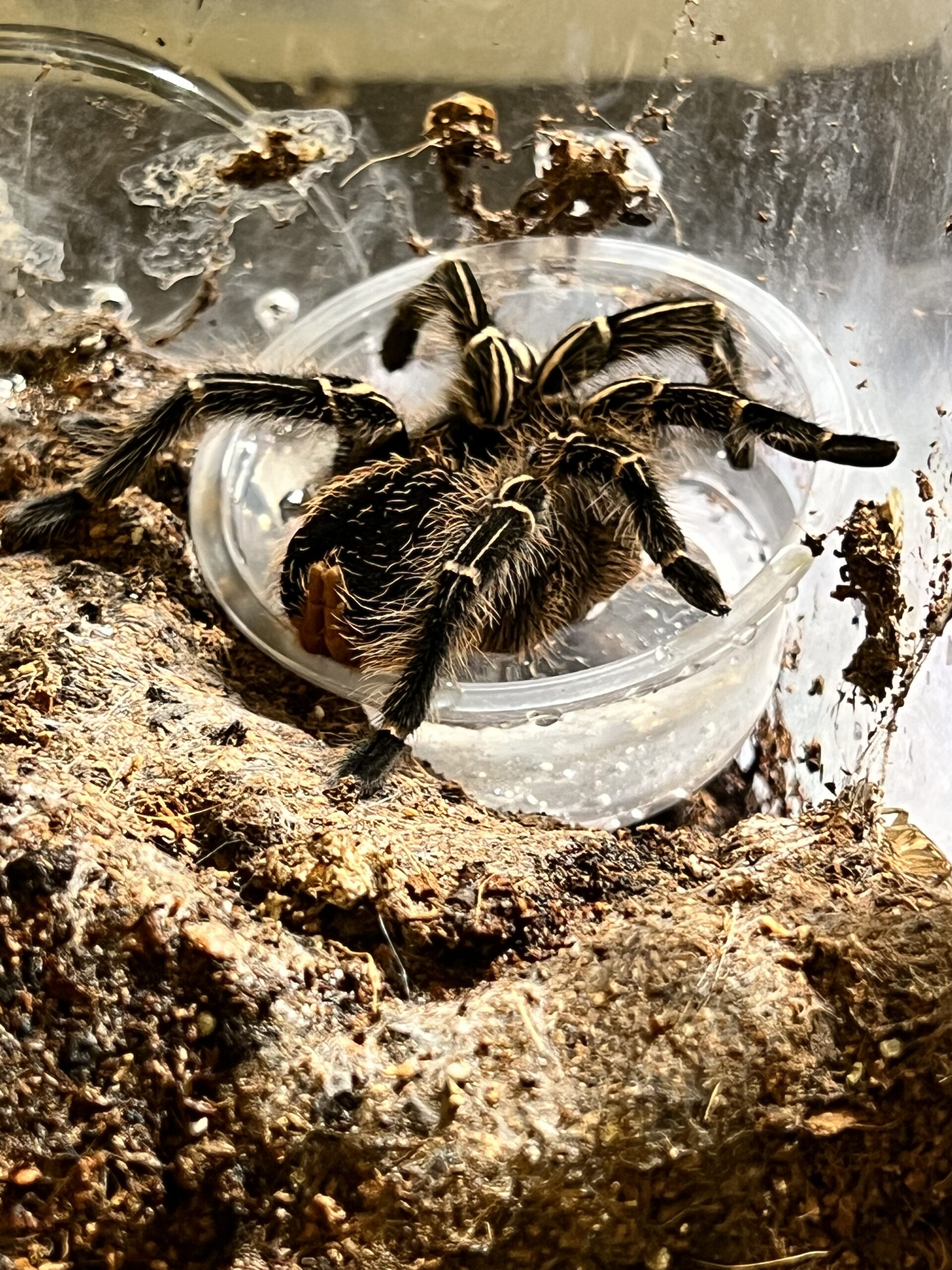
At a glance, Aphonopelma seemanni looks like one of those tarantulas that was designed to win people over fast. The dark body is handsome enough on its own, but the pale bands on the legs do the real work. They give it that striped, almost hand-painted look that earned it the common name Costa Rican zebra tarantula. It is one of those species that even people outside the hobby tend to remember after seeing it once.
What I like about this spider is that the looks are only half the story. Aphonopelma seemanni is a terrestrial New World tarantula from Central America, most often associated with Costa Rica but also reported from Nicaragua and Honduras. In captivity it has a reputation for being a steady burrower that likes a proper hide and enough substrate to disappear when it feels like it. That part matters, because this is not really a “leave it on display all day” kind of spider. It tends to keep its own hours, and that is part of the charm.
Keepers usually describe the species as manageable but a little skittish. That sounds right to me. It is not famous for dramatic threat displays, but it also is not a tarantula that seems interested in being bothered for no reason. Give it space, decent depth of substrate, a water dish, and a setup that stays slightly humid without turning stuffy, and it usually settles in well. Adult females can be long-term spiders too, often living well over a decade, which is one reason people get attached to them.
There are flashier tarantulas in the hobby, no question. There are bluer ones, redder ones, and species that hit you harder on first sight. But Aphonopelma seemanni has staying power. The leg pattern is clean, the behavior is interesting, and the whole spider has a calm, grounded feel when it is settled in its burrow entrance watching the room. If you like tarantulas that reward patience instead of demanding attention, this one makes a strong case for itself.