
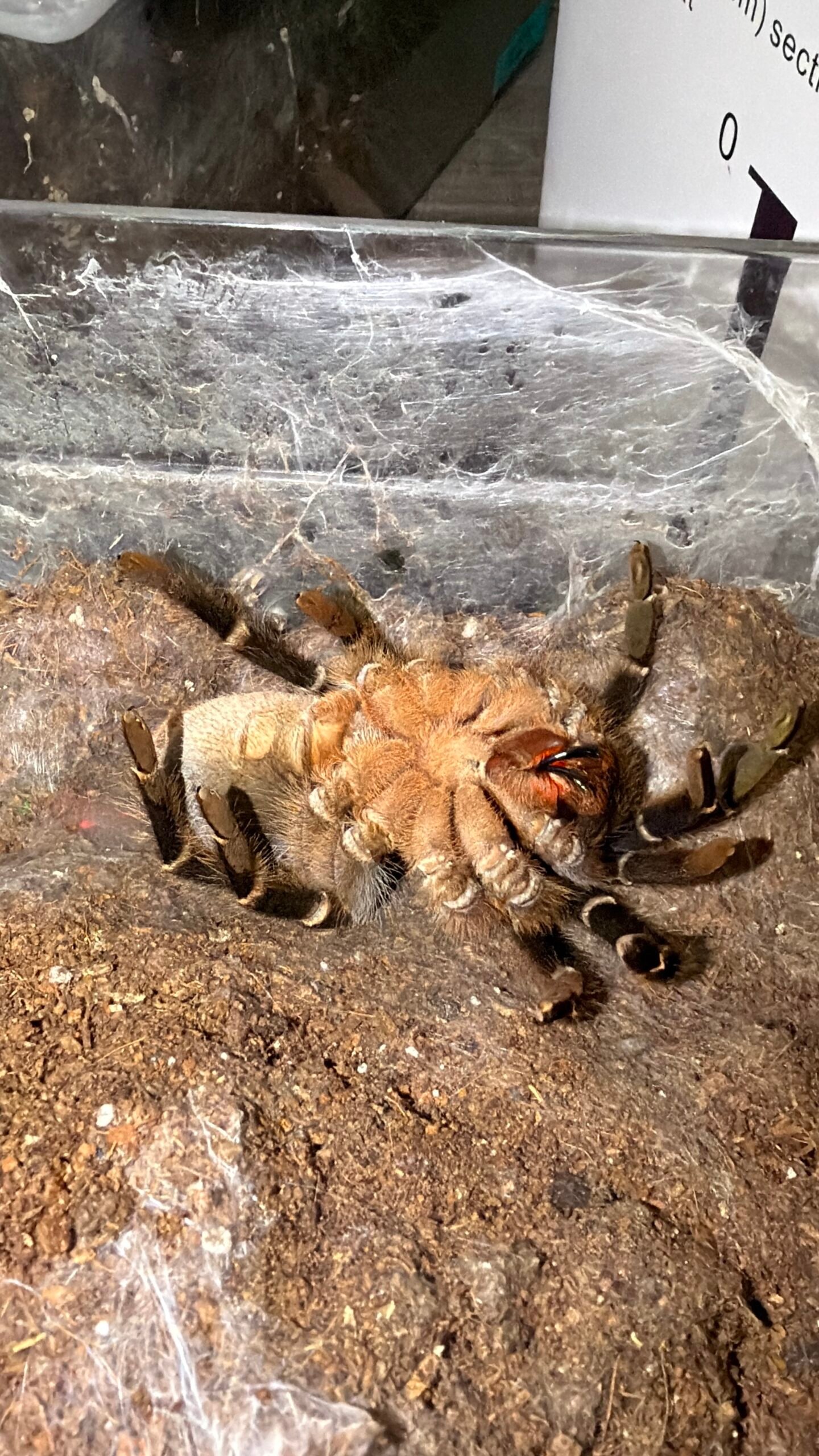
Few sights stop a keeper cold like a tarantula lying on its back. The first impulse is to reach in and help. Don’t. In this case, the upside-down spider is doing exactly what it is supposed to do.
This Aphonopelma seemanni, commonly called the Costa Rican zebra, was photographed in the middle of a molt. The pale, rumpled shape beside it is the old exoskeleton. Underneath is a larger spider in a new suit that is still soft enough to be damaged by prey, handling, or even a well-meant nudge.
Reading the lead-up
A molt often announces itself quietly. A spider that normally takes food may refuse it. Activity can slow down, the abdomen may look darker, and a burrower may close the entrance and disappear. A. seemanni is especially good at testing a keeper’s patience this way. It may stay underground for weeks, and digging it up to check usually creates more risk than reassurance.
No single sign is a timer. A missed meal does not guarantee a molt tomorrow, and an adult Aphonopelma can fast for a long time. The useful clue is a change from that individual spider’s usual routine.
The best help is restraint
Once premolt looks likely, remove any uneaten feeder insects and keep the water dish clean and full. Crickets can injure a helpless tarantula during or just after the molt. The enclosure should stay stable: no rehousing, no handling, no poking, and no spraying the spider directly.
A tarantula on its back is not in a “death curl.” Flipping over gives it room to pull free of the old exoskeleton. The process can look awkward and may take hours. Unless there is an immediate enclosure hazard, the right move is to watch from outside and leave the animal alone.
After the old suit comes off
A fresh tarantula can look almost unreal. The colors are cleaner, the body is soft, and the fangs may be pale or reddish instead of black. That is not the moment for a comeback meal. Water should remain available, but food needs to wait until the fangs have darkened and the new exoskeleton has hardened. For a larger specimen, that commonly means about a week or longer; small slings often harden sooner.
The discarded molt, called an exuvia, can be useful once the spider has moved away and there is no need to disturb it. Keepers can sometimes use the inside of the abdominal area to determine sex. Even then, the spider gets priority. There is no prize for retrieving the molt five minutes early.
Why this photo matters
A. seemanni is usually introduced as a striped, terrestrial Central American species with a talent for digging. Fair enough, but the real experience of keeping one is built around long stretches of waiting. The burrow closes. Meals are ignored. Then, if the keeper resists the urge to meddle, the spider eventually returns looking freshly painted.
This photograph catches the vulnerable part of that cycle. It is not dramatic because the keeper did something. It is dramatic because the spider was given the conditions and the quiet to do it itself.