
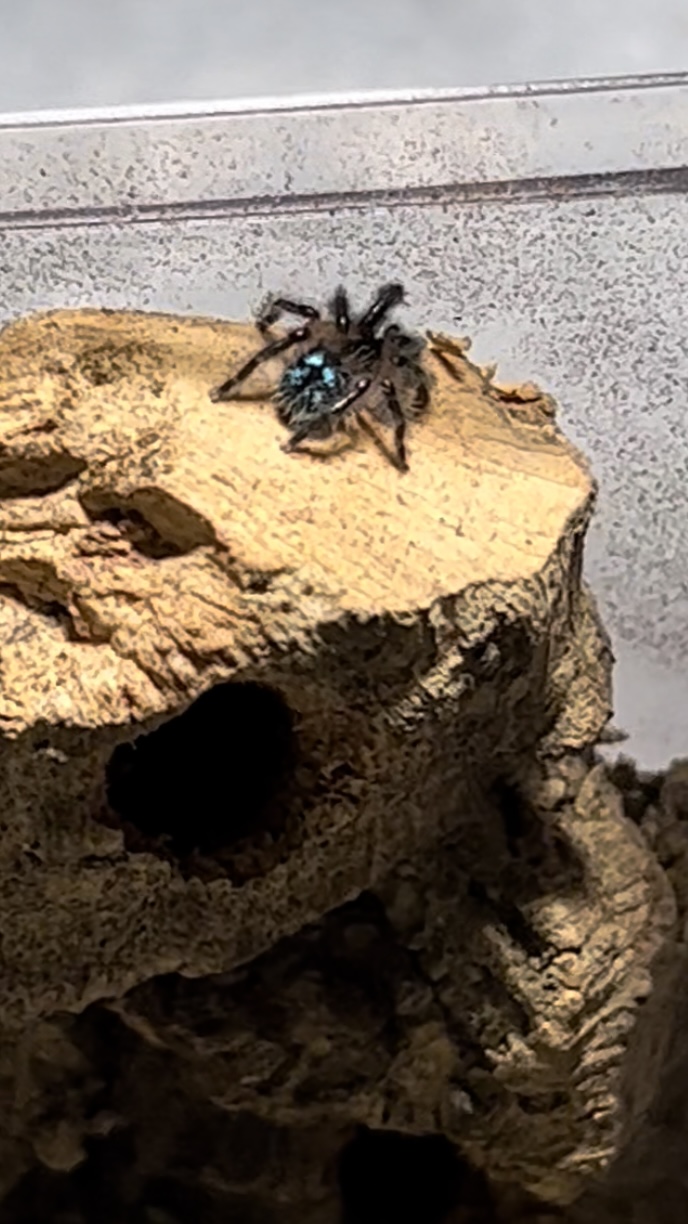
Some tarantulas grab attention because they’re huge. Typhochlaena seladonia stands out for the opposite reason. Better known as the Brazilian Jewel Tarantula, it’s tiny, arboreal, and almost hard to believe when you first see one. The colors are wild, the patterning is clean, and it has that rare look that makes you stop mid-scroll and take a second look.
Native to Brazil, T. seladonia is known for both its small size and the way it settles into bark and narrow crevices. It doesn’t fit the usual image people have of a tarantula at all. Instead of a bulky ground-dweller, it feels more like a tiny living gem from the Atlantic Forest—shy, delicate, and ridiculously pretty up close.
Why people love keeping them
The appeal is immediate. Metallic greens, pinks, oranges, and dark contrasting markings give this species a look that barely seems real. It’s also a good reminder that not every standout tarantula has to be big, defensive, or flashy in behavior. Some species just win people over by looking incredible.
That said, this usually isn’t the first tarantula people recommend to beginners. Its small size, more specialized arboreal needs, and higher price make it a better fit for keepers who already enjoy dialing in the details.
Temperament and setup
Typhochlaena seladonia is generally considered a shy New World species that would rather hide than fight. A proper enclosure matters a lot: cork bark, vertical climbing space, and steady humidity are all more important than interaction. This is a display tarantula, not a hands-on one.
When it’s kept well, the reward is in the little things. You’re not really getting dramatic feeding responses or massive sheets of webbing. The fun is watching where it chooses to retreat, how it uses the bark, and how the colors shift depending on the light.
A tiny masterpiece
In a hobby full of giants, Typhochlaena seladonia proves size isn’t everything. It’s one of the most distinctive tarantulas in the hobby, and probably one of the most photogenic too. If any tarantula looks made for a featured image, it’s this one.