
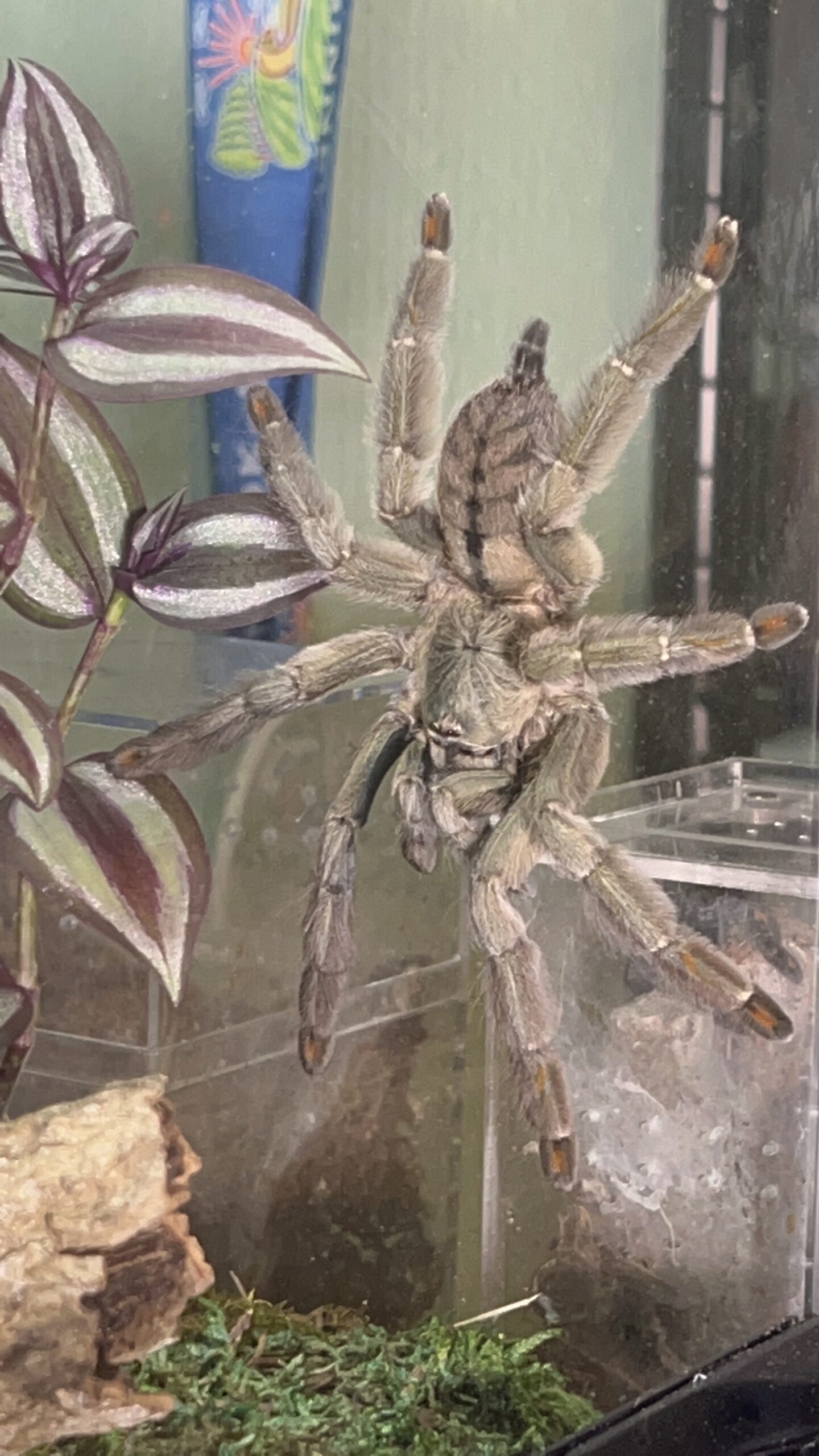
Tarantulas can put people off at first, but *Psalmopoeus cambridgei* has a look that feels more sharp and athletic than bulky or threatening. The Trinidad Chevron is one of those species that doesn’t need loud colors to stand out. It’s fast, long-legged, and very much built for life in the trees, which is a big part of why so many keepers end up liking it.
The spider in this photo shows exactly what makes the species appealing. That stance on the glass, the muted olive-brown body, the orange on the feet — it all works. It doesn’t have the over-the-top color of some of the hobby’s famous showpieces, but honestly, that’s part of the charm. It looks wild in a very real way, like something that belongs in the forest and never had to evolve for anyone’s approval.
Why people like P. cambridgei
This is a New World arboreal, so it wants height more than floor space. Give it cork bark, anchor points, and somewhere secure to vanish into, and it usually does the rest. Most specimens will lay down plenty of webbing, build out a retreat, and then make sudden appearances when something changes in the enclosure. They’re quick, alert, and always seem to know what’s going on around them.
Adult females usually top out at around five inches of leg span. Mature males get leggier and thinner, which gives them an even more spider-y look than usual. Like most arboreals, this isn’t really a species people keep for handling. It’s better as a display animal, especially if you enjoy watching behavior instead of thinking of a tarantula as something to hold.
Final thoughts
If you like fast New World arboreals and prefer a more natural rainforest look, the Trinidad Chevron is easy to appreciate. It’s elegant, reactive, and clearly made for living off the ground. This photo captures that really well, and it shows why the species has stayed popular with keepers for so long.