
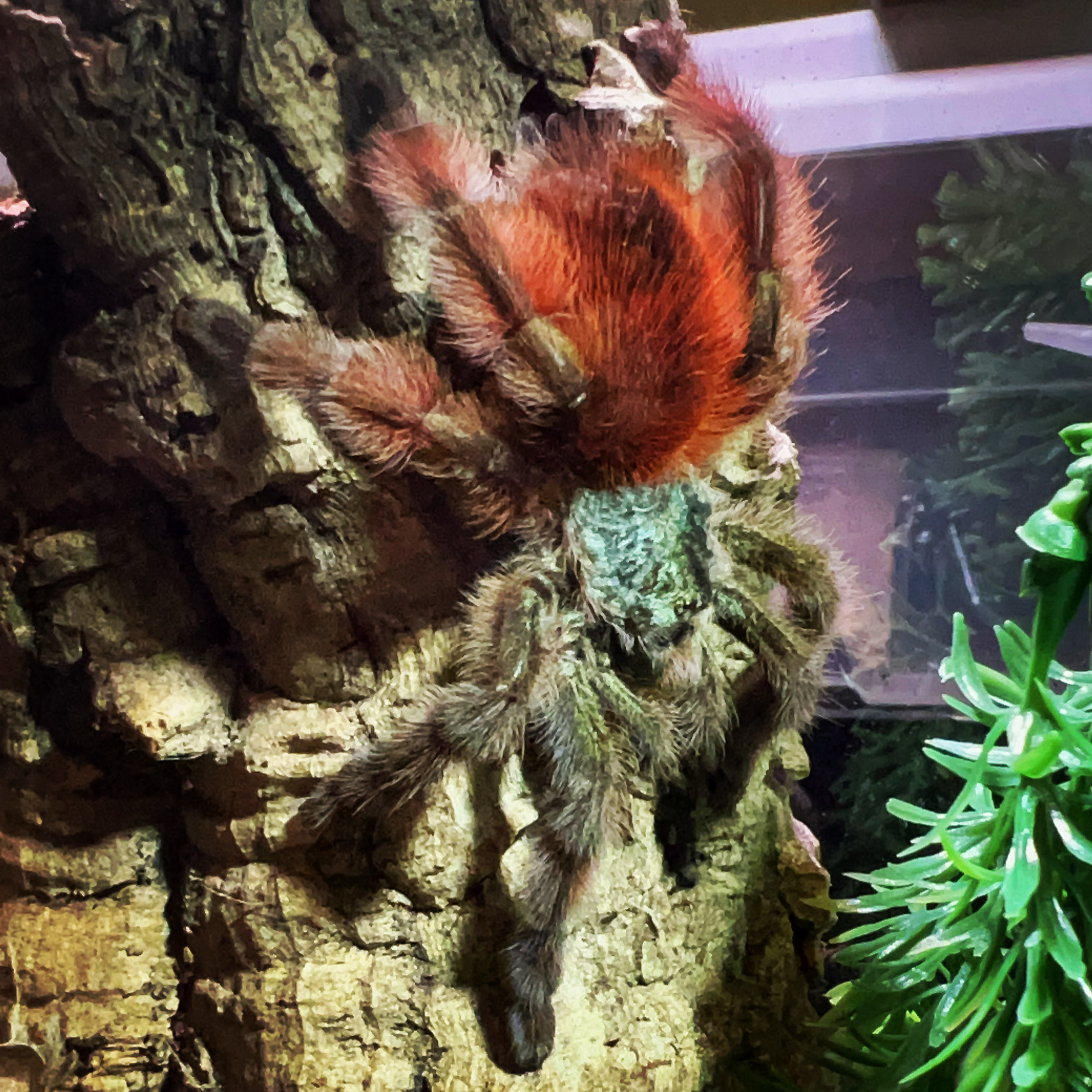
Some tarantulas only really wow people once they’re grown. Caribena versicolor is different. It catches attention at every stage of life.
This arboreal species from Martinique goes through one of the wildest color changes in the hobby. As slings, they’re often a deep metallic blue. As they grow, those colors shift slowly into greens, pinks, reds, and purples that make adults unforgettable.
Usually called the Antilles Pinktoe, Caribena versicolor stands out for more than just color. It has a graceful build and webs heavily when settled. Give it the right enclosure and it’ll build thick silk retreats up high, turning a basic setup into something worth staring at.
What makes this species special?
Mostly, it’s the transformation. A lot of keepers love watching this species mature because after each molt, the look changes noticeably. Raising one feels like watching several different spiders pass through the same enclosure over time.
Origin: Martinique
Type: Arboreal
Temperament: Usually fast and skittish more than defensive
Growth: Moderate
Standout trait: Dramatic color change from sling to adult
For care, height and airflow matter most. Caribena versicolor does best in a taller enclosure with plenty of places to anchor webbing. Ventilation is especially important. Most keepers prefer good crossflow with moderate humidity instead of letting the enclosure stay stuffy and damp. Cork bark, some foliage, slightly moist to mostly dry substrate, and a water dish usually make a solid setup.
Behavior-wise, this isn’t typically a species that stands its ground. It’s more likely to dash into its web tunnel than fight back. That makes it fun to watch, though maybe not ideal for someone hoping for a very calm spider during maintenance.
People love this species because there aren’t many tarantulas that bring together color, graceful shape, heavy webbing, and constant visual change as they grow. Once it settles in and starts laying down silk, it becomes one of those spiders that makes visitors stop and ask about it.
If you like arboreal tarantulas and want a species that changes noticeably at every stage, this one’s easy to appreciate. The specimen in the photo shows why the Antilles Pinktoe stays so popular in collections.