
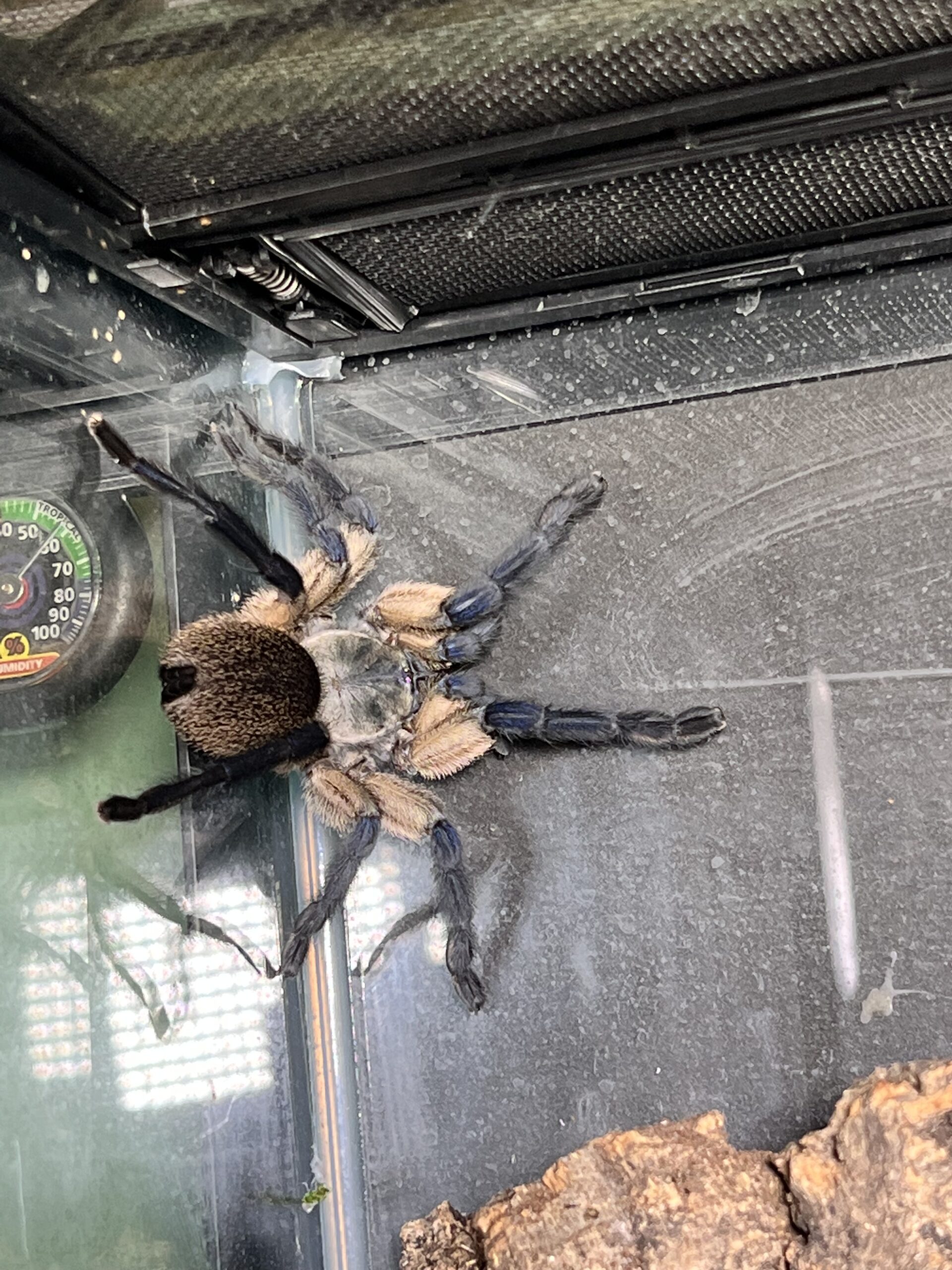
Some tarantulas get popular because they are flashy. Monocentropus balfouri earns it a different way. The color is real, of course, that soft steel-blue on the legs always looks good in a photo, but what really hooks people is the whole package. This is an Old World species from Socotra Island, a dry and strange-looking island off Yemen, and it carries that tough island feel with it.
In the wild, M. balfouri is a terrestrial tarantula that uses shallow burrows, crevices, and plenty of webbing to turn a patch of ground into a secure retreat. It does not have urticating hairs, so like other Old World species it relies more on speed, posture, and a quick defensive response when pushed too far. That alone makes it a species worth respecting. It is not the spider I would hand to a beginner just because the blue looks nice on Instagram.
What makes this species especially interesting in the hobby is its reputation for communal living. Balfouris are one of the few tarantulas keepers regularly talk about in groups, and when a setup is done well they can show a level of tolerance that still feels unusual in the tarantula world. Even so, that is not magic and it is not a guarantee. Good space, heavy webbing, and steady feeding matter. Experienced keepers know that ‘communal’ does not mean ‘careless.’
Adults stay in that sweet spot where they feel substantial without becoming monsters. Females can live well over a decade, while males usually have much shorter adult lives. So if you raise a female, you are not just buying a pretty spider. You are signing up for years of watching an enclosure slowly turn into a layered web fortress, which is honestly half the fun with this species.
If I had to explain the appeal of Monocentropus balfouri in one sentence, it would be this: it looks exotic, behaves like an Old World, and still manages to be oddly elegant. That mix is hard to fake. No wonder collectors keep coming back to it.